


NEWS
- Pharma & Biotech News #PharmaBuzz
- Weekly News Recap #Phispers
- Recent Product Approvals #GreenLight
- Quality Compliance Alerts #Warning!
- All News #Library
DRUGS & DEVELOPMENTS
MARKET INTEL by PharmaCompass

Create content with us, ask us
By PharmaCompass
2019-05-17
Impressions: 154 Article
Six years ago, journalist Katherine Eban had created a stir in the global pharmaceutical industry with her eye-opening, investigative report published in Fortune titled ‘Dirty Medicine’ on the blatant data falsification at Indian drug major Ranbaxy.
Eban is back with her exposes on the drug industry, this time in the form of a book titled ‘Bottle of Lies’. In a recent article published in the New York Times, Eban shared how famous FDA investigator Peter Baker uncovered data-integrity issues in India and China.
According to Eban, during his six years of doing foreign inspections (from 2012 to 2018), Baker uncovered “dangerous compromises behind the production of generic drugs”. Both in India and then in China, Baker uncovered fraud or deceptive practices in almost four-fifths of the drug plants he inspected. Some of the plants used hidden laboratories, secretly repeated tests and altered results to produce fake data that fundamentally misrepresented drug quality, and then submitted that data to regulators.
“In some instances, deceptions and other practices have contributed to generic drugs with toxic impurities, unapproved ingredients and dangerous particulates reaching American patients,” Eban said.
Eban interviewed over 240 people, including numerous whistle-blowers, for her book. “Some companies have encouraged data fraud as the most profitable path to securing approvals from regulators, and have used deceit to hold the FDA’s investigators at bay,” Eban said.
“In the United States, FDA investigators typically show up unannounced to inspect plants. But overseas, the FDA has opted to announce the vast majority of its foreign inspections in advance. Overseas plants even ‘invite’ the FDA to inspect; the investigators then become the company’s guests and agree on an inspection date in advance. Plant officials have served as hosts and helped to arrange local travel,” she said.
In the wake of Eban’s book launch, other news reports on the safety and efficacy of generic drugs got published. A CBS News report said that though the FDA says a generic medicine is the same as a brand name medicine in dosage, safety…and quality, “experts at the Cleveland Clinic have determined some generics aren't a close-enough match for their comfort. Even a small variance in the drug may pose serious risks for some patients”.
Following these reports, the FDA went into damage control mode. In a tweet, former FDA commissioner Scott Gottlieb said: “I take generic drugs and have extreme confidence in them. I prescribed them to help my patients achieve value in their healthcare. Some bad problems arose years ago. We learned from them; and responded. Today's generic drug framework is vigilant and upholds FDA’s gold standard.”
Similarly, Janet Woodcock, director of the Centre for Drug Evaluation and Research (CDER), said in a statement: “Generic drugs are held to a rigorous approval standard and are as safe and effective as brand name drugs. Importantly, generic drugs manufactured outside the US must meet the same approval standards as those made domestically; and if they do not meet the FDA’s standards, the FDA can deny them entry into the US”.
In an interview published on the FDA website, Michael Kopcha, director of CDER’s Office of Pharmaceutical Quality said: “The quality of our drug supply is better than ever before. There is no difference in the quality of drugs based only on where they are made. We use the same tools to assure quality whether a drug is manufactured in the United States or abroad.”
The PharmaCompass Newsletter – Sign Up, Stay Ahead
Feedback, help us to improve. Click here
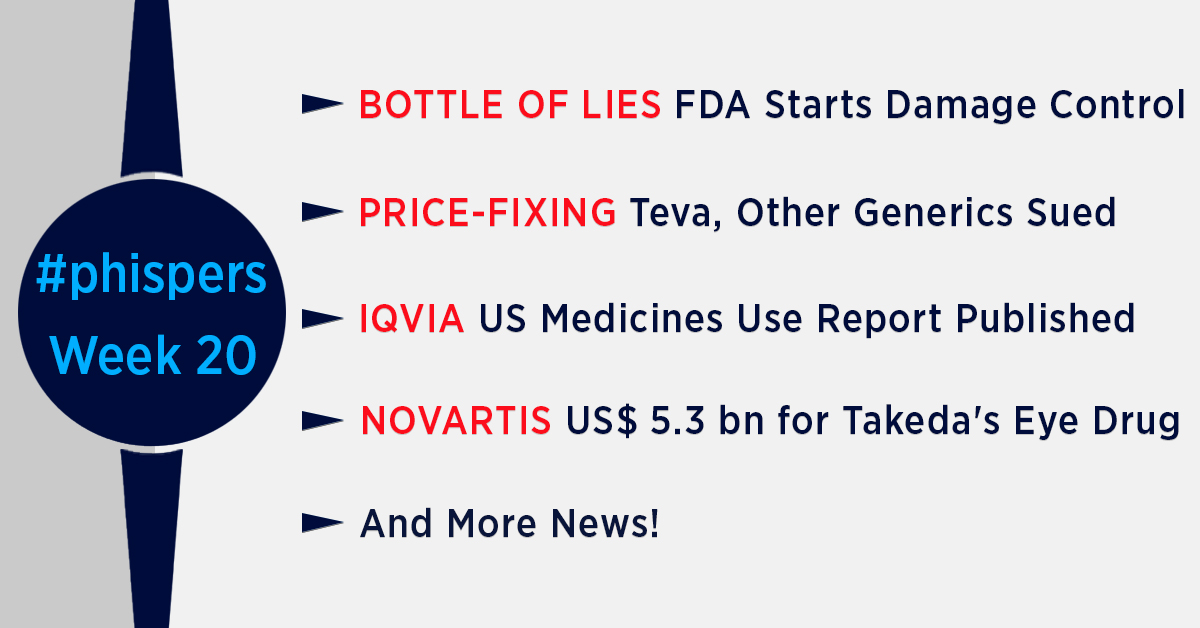
Image Credit : #Phisper Infographic by SCORR MARKETING & PharmaCompass is licensed under CC BY 2.0
“ The article is based on the information available in public and which the author believes to be true. The author is not disseminating any information, which the author believes or knows, is confidential or in conflict with the privacy of any person. The views expressed or information supplied through this article is mere opinion and observation of the author. The author does not intend to defame, insult or, cause loss or damage to anyone, in any manner, through this article.”