


NEWS
- Pharma & Biotech News #PharmaBuzz
- Weekly News Recap #Phispers
- Recent Product Approvals #GreenLight
- Quality Compliance Alerts #Warning!
- All News #Library
DRUGS & DEVELOPMENTS
MARKET INTEL by PharmaCompass

Create content with us, ask us
By PharmaCompass
2019-04-04
Impressions: 61 Article
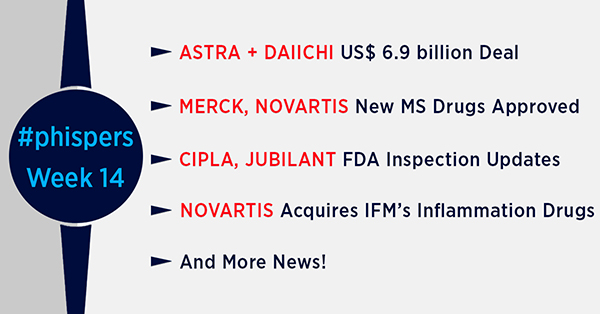
Last week, Cambridge-headquartered AstraZeneca struck a deal worth US$ 6.9 billion with Japanese drug major Daiichi Sankyo, which includes an upfront payment of US$ 1.35 billion, to jointly develop and commercialize the antibody drug conjugate cancer therapy trastuzumab deruxtecan.
The oncology treatment is currently undergoing two phase III trials for a breast cancer subtype known as HER2-expressing tumors. One in five breast cancer patients have this type of cancer.
The deal comprises payments of US$ 5.6 billion in regulatory, development and sales milestones to Daiichi and hands co-development and commercialization rights to AstraZeneca outside of Japan (where Daiichi has exclusive rights). The deal has the potential to redefine breast cancer treatment.
Daiichi has also announced its plans to accelerate trastuzumab deruxtecan’s Biologics License Application (BLA) filing with the US Food and Drug Administration (FDA) to the first half of 2019. Earlier, it had plans for a 2020 filing.
AstraZeneca is targeting blockbuster sales of over US$ 1.4 billion from trastuzumab deruxtecan amidst competition from Roche’s Kadcyla.
This also marks a bold move under the leadership of Pascal Soriot, AstraZeneca’s CEO, who has charted a mission to emerge as a major force in oncology that can contend with the likes of Merck & Co. Since Soriot took over in 2012, the company has phased out aging treatments and built a war chest for cancer-related research.
The PharmaCompass Newsletter – Sign Up, Stay Ahead
Feedback, help us to improve. Click here
Image Credit : #Phisper Infographic by SCORR MARKETING & PharmaCompass is licensed under CC BY 2.0
“ The article is based on the information available in public and which the author believes to be true. The author is not disseminating any information, which the author believes or knows, is confidential or in conflict with the privacy of any person. The views expressed or information supplied through this article is mere opinion and observation of the author. The author does not intend to defame, insult or, cause loss or damage to anyone, in any manner, through this article.”