

BLOG
MARKET INTEL by PharmaCompass
CONTENT by Suppliers
- Interview #SpeakPharma
- Video #SupplierSpotlight
- Vlog #PharmaReel
- Company Bio #AboutSupplier
- Services Bio #AboutCapabilities
News

Create content with us, ask us
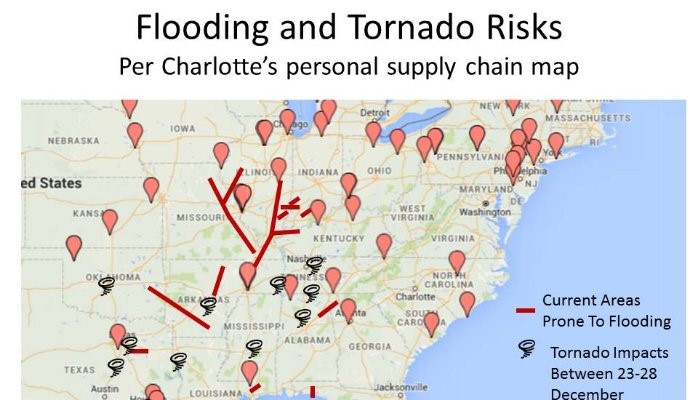
Welcome back from the holidays! To help you catch up quick... I've divided this report into two: here's a brief review of what's going on in the chemical supply chain as far as weather.Because a picture is worth a thousand words, I've included a graphic from my personal supply chain map showing areas impacted by holiday floods and tornadoes. If you have any questions, feel free to contact me.
Note: a
non-weather related update will come out later this week...
El Nino: Possibily the strongest El Nino on record continues to impact several
continents. Check your supply chain in these areas:
North America: Over the holiday, tornadoes and floods swept across the Central and Southeast states (see graphic above), while snow and ice was impacting the Southwest. For the chemical supply chain, much of the solvent industry is located from Houston to New Orleans, and major suppliers in the midwest. Floods along the Mississippi River has caused barged traffic to stop. While this may not seem like it could impact the chemical supply chain, there is a potential impact to price and availability of some key raw materials, specifically sodium hydroxide, corn derived products, and ethanol. Check your supply chain for both material and transportation impacts.
Europe: Northern England is facing devastating floods leaving thousands homeless. My personal supply chain shows minimal impacts, but you should check yours for impacts in the Lancashire and Yorkshire areas.
South America: Rains and mudslides are impacting Paraguay, Argentina and Uruguay. In my personal supply chain map, these areas are primarily know for mining of various metals such as aluminum, lead, copper, zinc, silver and gold.
Australia: High temps and drought is contributing to fires. For the Biotech supply chain, materials such as FBS/FBA could be at risk.
Africa: Eastern Africa is experiencing droughts that impacting the food supply. While we do not source commodities from these areas, agricultural building blocks can be diverted to these areas.
Asia: Areas of South and Southeast Asia are experiencing weaker than normal monsoons that support agriculture as well as hydroelectric power. Indirect impact is that many cleanroom supplies and electronic components are manufactured in theses areas that could be impacted by lack of water and/or electricity.
Author: Charlotte Hicks
The PharmaCompass Newsletter – Sign Up, Stay Ahead
Feedback, help us to improve. Click here
Image Credit : Flooding and Tornado risks by Charlotte Hicks is licensed under CC BY 2.0
“ The article is based on the information available in public and which the author believes to be true. The author is not disseminating any information, which the author believes or knows, is confidential or in conflict with the privacy of any person. The views expressed or information supplied through this article is mere opinion and observation of the author. The author does not intend to defame, insult or, cause loss or damage to anyone, in any manner, through this article.”